
学校2015
China Warns Military Won't 'Sit Idly By' If Pelosi Lands in Taiwan_我的网站

A | US House Speaker Nancy Pelosi is expected to arrive in Taiwan on Tuesday night following her scheduled visit to Malaysia, according to Taiwanese media reports, sparking further tensions between Washington and Beijing.,Although Taiwan is not included in Pelosi's public itinerary, TVBS News Network reported that Pelosi might stay overnight in Taiwan before hopping on a plane to South Korea on Wednesday.,Pelosi and her Congressional delegation have reportedly booked two five-star hotels in the Xinyi and Zhongshan districts of Taipei, where "relevant security measures" have been in effect.,However, Taiwanese officials remained mum on the reports, saying "there is no new information to share with the media." At the same time, they welcome visits by "distinguished foreign guests," Taiwanese premier Su Tseng-Chang told local media.,If Pelosi arrives in Taipei, she will be the highest-ranking official to visit the island since 1997.,Meanwhile, on Monday, China's Ministry of Foreign Affairs said that Pelosi's visit would be treated as "a gross interference in China's internal affairs" and its military "will not sit idly by.","We would like to tell the United States once again that China is standing by, the Chinese People's Liberation Army will never sit idly by, and China will take resolute responses and strong countermeasures to defend its sovereignty and territorial integrity," Zhao Lijian, a spokesperson of the Chinese foreign ministry, said.,During a 2.30 hours long phone call last Thursday, China's President Xi Jinping warned Biden that Washington should abide by the one-China principle and "those who play with fire will perish by it.",Meanwhile, Singapore Prime Minister Lee Hsien Loong highlighted the importance of "stable US-China relations for regional peace and security" in meeting with Pelosi, who arrived in the East Asian country on Monday morning.,According to Singapore's Foreign Ministry, two leaders exchanged views on key international and regional developments, including the Ukrainian conflict, cross-strait relations, and climate change.,The US switched diplomatic ties from Taiwan to China in 1979, and since then, Washington has maintained its stand on the "One-China" policy with limited relations with the island.。
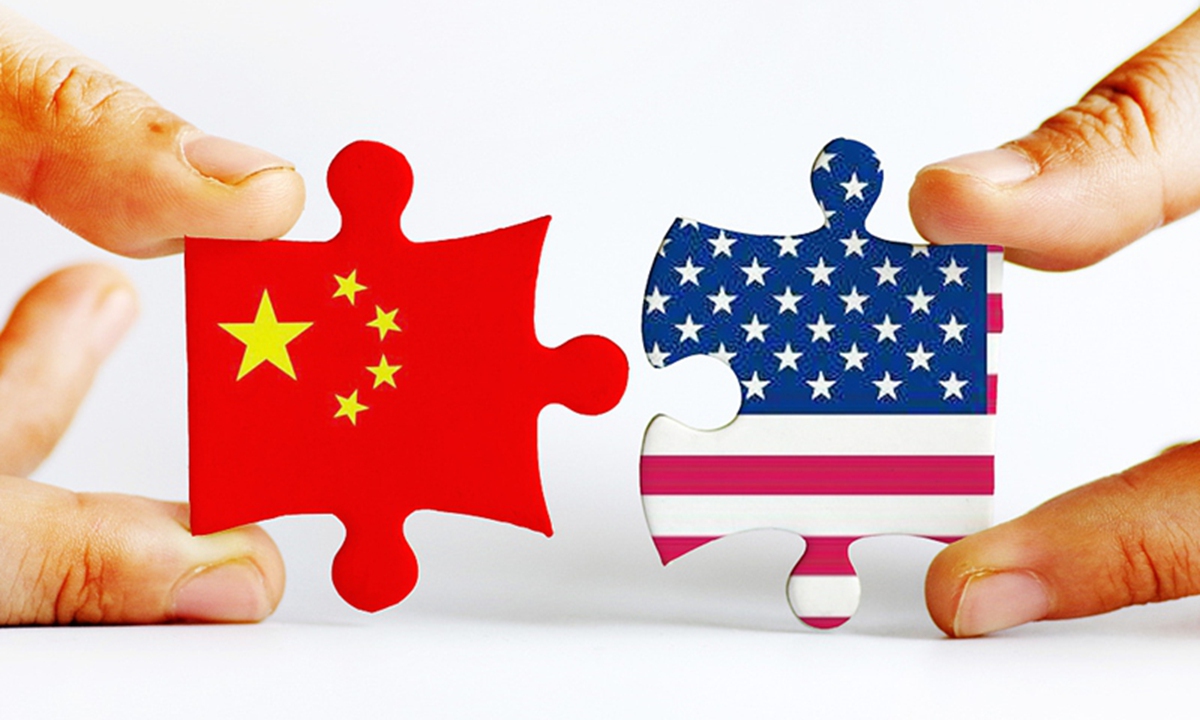
The proposed Office of Management and Budget (OMB) rule, set to take effect in December, would mark one of the biggest overhauls of US science funding in decades, giving political appointees greater authority over grant awards previously guided by scientific peer review and requiring that they "advance the President's policy priorities," according to the Washington Post.
It would also effectively expand the 2011 Wolf Amendment, which bars scientists from using NASA funding for bilateral collaborations with China, to all federal agencies and scientists receiving federal funds, marking the largest break in US-China scientific engagement in decades, the US media outlet reported.
So far, the proposed rule has garnered nearly half a million public comments, many from scientists and leading US science bodies. A Washington Post analysis of 50,000 of those comments found that around 88 percent were negative.
The rule, initially set to take effect in October, was pushed back to December after a bipartisan stopgap funding bill temporarily halted its adoption. Unlike the Wolf Amendment, the rule does not require congressional approval to take effect.
"I do think there are still members of Congress who think we have a monopoly on knowledge. They think we're still in the Cold War Soviet era ... where we were ahead in most areas of science and technology. That is not the case with China. We are no longer the leader in many areas of science," said Tobin Smith, senior vice president for government relations and public policy at the Association for American Universities, which advocates on behalf of leading US research universities, per the Washington Post.
Scientists warn that the rule risks subjecting long-term scientific research to four-year political cycles. "We will not succeed if with every new administration we are ping-ponging back and forth about priorities," the American Association for the Advancement of Science said in a blistering comment, urging the administration to withdraw the rule. "Fast-tracking such profound changes ... hands an easy victory to nations like China," it said, the Washington Post reported.
This reflects a fundamental divide between the US government and the scientific community over how science should develop, Wang Yiwei, a professor at Renmin University of China's School of International Studies, told the Global Times. He noted that politicians tend to believe that suppressing China as a competitor would allow the US to preserve its market dominance and technological edge.
Scientists, however, tend to follow a different logic, as scientific progress depends on openness, exchanges and collaboration. If science and technology are driven solely by competition and private capital, with the ultimate goal of maintaining technological monopolies, this could create greater risks and ultimately undermine US interests as well, Wang said.
The proposed rule change is the latest salvo in a broader battle in Washington over how to respond to China's rise as a scientific superpower. In July, the US National Science Foundation (NSF) also moved to ban collaborations between scientist it funds and many Chinese research institutions and their employees, according to Science magazine.
Liu Shaoshan, director of the Center for Embodied AI at the Shenzhen Institute of Artificial Intelligence and Robotics for Society and a former US-based researcher, told the Global Times in a previous interview that the NSF's new proposed rules created a "talent wall," arguing that restrictions based on nationality, institutional affiliation, and research partnerships could reduce the global talent pool available to the US, weaken its ability to attract leading scientists, and slow scientific innovation.
Liu also said scientific advancement relies not only on discovery but also on the exchange, validation, and dissemination of knowledge.
Wang also said China has built significant strengths through its vast pool of scientists and engineers, complete industrial chains and massive application scenarios, while increasingly moving from application-oriented innovation toward original research. Against this backdrop, US technological blockades and restrictions on cooperation are unlikely to halt China's progress, but could instead isolate American scientists from China's latest research and collaboration opportunities. Such an approach could also prevent the two countries from leveraging their respective strengths and ultimately undermine US competitiveness, Wang said.
。
Current article:http://21x.ninyakenhongnian.sbs/3b3x/d5t57.html
Published on:16:26:57
我的网站最近更新
- 1399美元:Sigma 28mm f/1.4 dg hsm Art Lens定价公告
- 这届网友开始自制羽绒服了 花一周时间自制高仿“大鹅”仅需339元?
- 安居鹭岛 智护颐养两相宜
- 创维储能获罗马尼亚、塞浦路斯储能订单
- 新加坡海军将和中国人民解放军进行联合演习
- The Supreme Court orders makers of gun parts to comply with rules on ghost guns
- 王上源1v2关键拦截!媒体人:救国足一命!传过去就是半场大单刀
- 华安基金:创业板50指数聚焦四大新质生产力赛道
- 2026年08月25日苯乙烯产业价格涨跌榜
- 美以如意算盘落空了,哈马斯开打后,两国方案是解决问题唯一途径
- 县领导深入乡镇检查防汛工作
- Energy crisis driving up cremation costs in France
- 大厂龙虾,卷到头了!大虾吃小虾开始~
- 《GTA6》最新泄露实机中葱哥喊话玩家:该反击了!
- iPhone 14 Plus渠道价已破发1700元 红色版最惨
- 协议刚落地,沙特就被炸了,土巴直接装死,中东版北约成了笑话!,兵器展望,原创 协议刚落地,沙特就被炸了,土巴直接装死,中东版北约成了笑话!
- 以色列称无意与土耳其升级冲突,绝不接受土在叙驻军
- 巴拿马宣布进入紧急状态
- 我的AI新搭档丨⑤ AI赋能书香 慧享阅读新体验
- 联合国成立工作组应对霍尔木兹海峡危机
- US eases oil, gas and gold sanctions on Venezuela after electoral roadmap signed
- 怀旧经典,新游扎堆!暑期武侠MMO大乱斗!十一年老服焕新
- 瓦茨克回应赫内斯:克洛普带自己团队入职不对吗?孔帕尼不也是?
- 梅尔茨再次当选德国基民盟主席,下一站德国总理府?
我的网站热门资讯
- 要回泉州市丰泽区孟变贸易商行恶意占用的397.42元押金
- 【品种策略】PTA:08月26日多家期货公司晨报观点汇总
- 长期护理保险支付管理将统一规范
- 智能拳击手套和沙袋可用于每月订阅费用
- 理性购彩遇好运!河南三位购彩者中得大乐透二等奖
- 12.4万亿元!一组数据看我国民生投入不断加大,12.4万亿元!一组数据看我国民生投入不断加大
- 全区总河长会、林长会暨防汛抗旱工作会议召开
- 打造城市夜间经济新地标!濠洼步行街获评山东省特色商业街
- NBA新赛季赛程调整:背靠背减少 魔鬼赛程取消
- 余杭经济开发区以项目建设夯实产业根基
- 时政微观察丨从这些生动比喻感悟正确政绩观
- IGN实测:“超高画质”是骗局 与高画质几乎看不出区别
- 小米北京东历新年:小米8手机2099元,小米电视4c 40寸999元
- 成为自由球员再续约?名记:勇士愿为库里奉上任何他想要的合同
- 没学AI写作课程却遭分期催收要求解约清账单
- 2025粤港澳车展:雷克萨斯ES 200湾曜特别版亮相
- 政声直达丨热点快评·“越取越多”的水 见证一座城的善意接力
- 《古墓丽影:决定版: Legacy of Atlantis》正在“重塑”系列初代作品,加入专注槽、技能树与草药酿造系统。
- クリアファイルを上からスポッと被せるだけで→「天才やんけ」 洗濯に革命が起こるアイデアに「よく思いつくなぁ」
- 个别国家和机构借香港特区司法案件恶意抹黑 外交部:坚决反对
- 工信部:将有序推动电信领域扩大自主开放,推动形成具有广泛共识的数字治理规则和标准
- 7月末中国境内公募基金资产净值达39.11万亿元,7月末中国境内公募基金资产净值达39.11万亿元
- 动态掌握企业情况 抓好重点企业培育
- Xiamen launches investigation into disinfection firm accused of using toxic pesticide at restaurants